 August 12, 2026
  7 minutes
 From the azure waters of the Mediterranean to the crystalline lagoons of the Pacific, coastal communities around the world are as varied as the waters that shaped them. Yet they all share an enduring connection to the ocean, which has sustained their families and livelihoods for generations. The survival of these communities has long depended on the knowledge of the land and sea passed down by their elders. However, their traditional way of life is increasingly threatened by challenges such as climate change, unsustainable economic activities and declining fish stocks.
Peer-learning hubs can help communities face these challenges. By connecting traditional knowledge holders, policymakers, researchers and practitioners, learning hubs help bridge gaps in understanding and turn knowledge to action. They accelerate the adoption of locally led solutions, enable the scaling of proven approaches and strengthening community leadership.
Effective learning also contributes to improving the resilience of both coastal ecosystems and the people who rely on them, creating lasting results that extend far beyond individual projects.
Looking ahead, WWF-Philippines aims to support the expansion of the learning-hub model across the wider Palawan seascape through a dedicated five-year programme.
Click here to skip to the recommended steps for establishing a community learning network.
The Coral Triangle’s experience
Located between the Pacific and Indian Oceans, the islands of the Coral Triangle are a marine biodiversity hotspot. They are also particularly vulnerable to the effects of climate change, such as rising sea levels, warming oceans and extreme weather events.
To respond to these challenges, the Coral Triangle Initiative on Coral Reefs, Fisheries and Food Security (CTI-CFF) was founded in 2009 by Indonesia, Malaysia, Papua New Guinea, the Philippines, Solomon Islands and Timor-Leste. As part of the Regional Plan of Action (2021-2030) the CTI-CFF, Coral Triangle Center and WWF assessed 126 capacity providers, including governments, NGOs and academic institutions across the region to identify skills gaps and training opportunities. This assessment led to the development of the Capacity Building Roadmap for the region.
One of the Roadmap’s four strategic pillars focuses on mobilising peer-learning networks. Existing community groups were evaluated to identify models that could be replicated and new community learning platforms were established. This included the CTI-CFF Capacity Building Repository, an online platform that connects marine conservation practitioners and local community leaders to skills-building resources, such as e-learning courses, training materials, existing learning networks and funding opportunities.
WWF is helping to realise the Capacity Building Roadmap by working with local organizations in its six Coral Triangle countries to establish a network of learning hubs. Together, these hubs create opportunities for communities to share knowledge, build skills and develop climate adaptation solutions. Existing nonprofit organizations provided potential models for organizing communities that informed the design of learning hubs across the region.
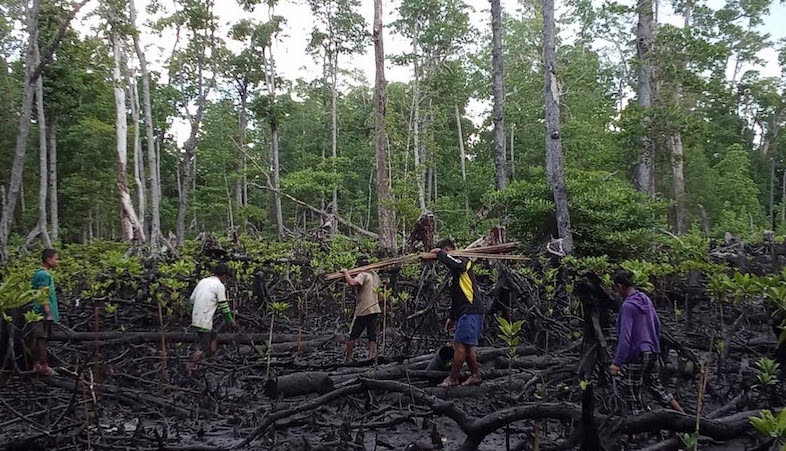
In Palawan, the Philippines, WWF supported the establishment of learning hubs in the municipalities of Bataraza and Balabac.The hubs were co-designed by local partners through a deeply participatory process. WWF actively listened to communities to understand common challenges, ensuring that the hubs reflected local insights, needs and priorities. While mangrove restoration was initially identified as the focus of the Palawan hubs, their scope soon expanded to include broader resilience education. The capacity-building activities they focus on include nature-based solutions, digital inclusion, enterprise development and citizen science initiatives that contribute to waste management.
To guide implementation, WWF worked with community groups to develop a framework for the Coral Triangle learning hubs built on three strategic pillars:
- Interactive community learning builds local capacity and traditional knowledge through mentoring, coaching, experiential learning, peer exchange and volunteering.
- Knowledge development, management and production focuses on documenting best practices, generating evidence of impact and creating accessible knowledge resources.
- Information, education and advocacy support the development of communication materials and multimedia campaigns that raise awareness and encourage community participation.
This framework guided the WWF-Philippines team to start by identifying potential partnerships at multiple levels of governance and civil society. Where it was first applied, in Bataraza, the Bataraza Learning and Innovation Hub was developed in partnership with the municipal government, while the Buliluyan Community Learning and Innovation Hub was established with the Barangay government. In Balabac, the Melville Learning Centre was co-designed with the Molbog Indigenous Peoples’ community. This co-design approach enables communities to take ownership of the hubs, while becoming part of a wider regional network.

The hubs are already delivering meaningful results. The Bataraza and Melville hubs have trained 88 community facilitators and supported 229 community members in mangrove restoration activities up to date. They have also produced a range of knowledge products, including field guides, restoration manuals, and training resources developed jointly by researchers and community members. Learning has been accelerated through the Bataraza Learning Hub, an online database hosted by the Municipality of Bataraza. This shared repository for ecological data is available to local government, students and community members.
The WWF-Mediterranean Marine Initiative’s experience
As in most coastal communities around the world, livelihoods across the Mediterranean have historically depended on small-scale fisheries. But as pressures on the sector continue to grow, there is an increasing need for collective action. The region’s Small-Scale Fishers’ Forum (SSF Forum) champions a cross-regional learning approach, connecting fishers to share knowledge, build capacity and strengthen collaboration.
The SSF Forum was founded by the General Fisheries Commission for the Mediterranean (GFCM) and partners in 2020 in response to recommendations outlined in the Regional Plan of Action for Small-Scale Fisheries (RPOA-SSF) in the Mediterranean and the Black Sea, which identified capacity building and skills development as essential tools to achieve a more sustainable small-scale fisheries sector. Established and co-organized with WWF, the Forum connects small-scale fishers, fish workers, regional institutions and other relevant stakeholders, and contributes to the implementation of the Voluntary Guidelines for Securing Sustainable Small-Scale Fisheries, which emphasise inclusive, participatory approaches to fisheries governance.
The SSF Forum’s learning programme was updated in March 2023 through a consultative exercise involving representatives from 13 Mediterranean and Black Sea countries. Participants identified four priority themes for a series of regional workshops over the following two years: non-indigenous species, strengthening fisher organizations, marine pollution and selective fishing gear. WWF played a key role in facilitating the workshops and worked with local colleagues to identify small-scale fishers to invite to the discussion table.
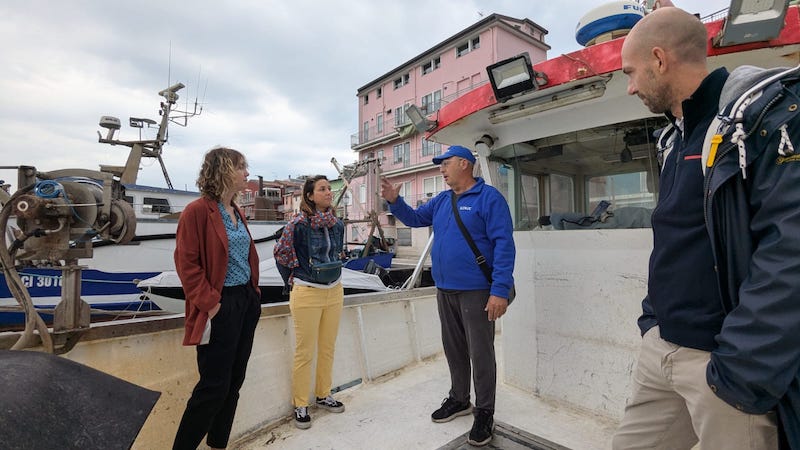
Rather than relying on top-down training, the SSF Forum is built around a process of social learning where knowledge is produced through group interaction. Fishers bring their own experiences and local ecological knowledge to discussions. Storytelling and collaborative learning replace technical presentations, creating space for participants to reflect on common challenges and develop shared solutions.
To understand how to better tailor learning approaches to the Mediterranean context, WWF conducted a survey on the SSF Forum’s learning programme in 2024. The study found that 70% of participants said learning together was essential, while 84% made new connections through the SSF Forum. Nearly half went on to collaborate on initiatives within their own communities. It also found evidence of behavioural changes, with half of the fishers reporting changing how they worked, including using more sustainable fishing practices.
The survey also identified opportunities to strengthen future programmes, such as developing standardised learning materials. The need for more practical support was also highlighted, especially relating to safety at sea, organizational capacity, administrative procedures, income diversification, dealing with recreational fisheries and improving market access and product valorisation.
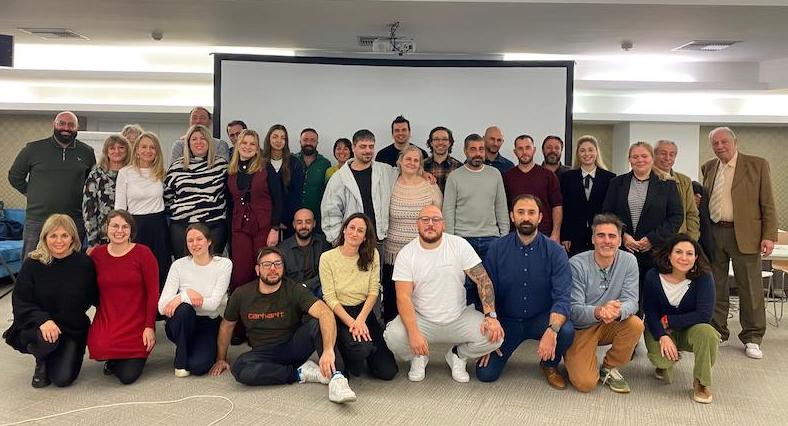
When the SSF Forum learning programme concluded in 2025, its outcomes helped shape the next phase of training, which will run from 2026 to 2028. Themed “From dialogue to action”, it will entail more action-oriented sessions that centre on practical solutions, capacity building and entrepreneurship, while contributing to the final implementation phase of the RPOA-SSF.
The programme demonstrated that peer-to-peer learning goes beyond building skills to foster trust and solidarity around the shared stewardship needed for more resilient fisheries and coastal communities.
WWF-South West Indian Ocean’s experience
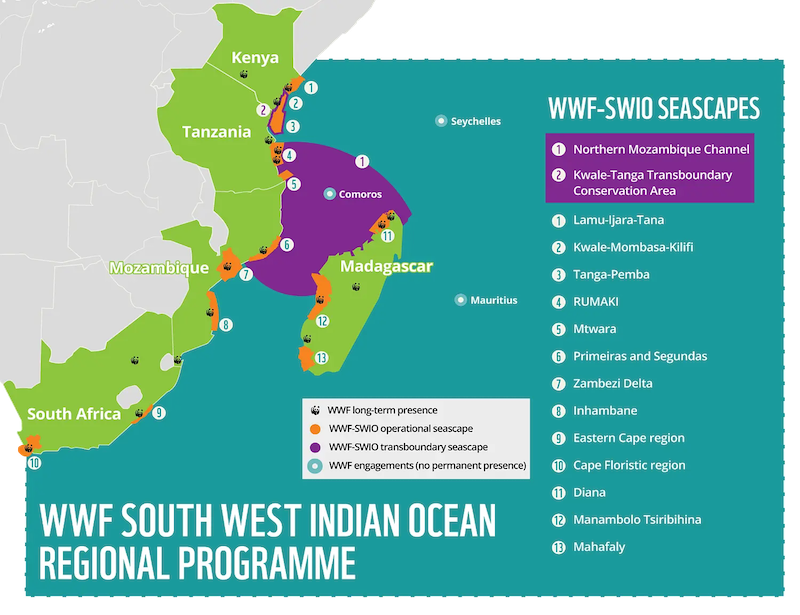
In 2024, the WWF South West Indian Ocean Regional Programme (WWF-SWIO) and Coastal Oceans Research and Development in the Indian Ocean (CORDIO) East Africa commissioned a study to better understand the common challenges facing coastal communities across the region, which at the time included Kenya, Tanzania, Mozambique, South Africa and Madagascar – where WWF has teams – as well as Somalia, Seychelles and the island countries of Comoros, Mauritius and Réunion.
The study shed light on a mismatch between communities’ needs and the ways organizations worked with them. Capacity-building initiatives provided useful training across the region, but most were project-based, short-term and limited in scope. A lack of coordination meant that training efforts were often duplicated. And overall, such training was unable to sufficiently address the complex capacity needs of community conservation practitioners.
The findings highlighted the need for a different approach that would support continuous learning, collaboration and knowledge sharing beyond individual projects. A permanent regional learning network was envisioned that would enable community-based organizations (CBOs) to learn from one another, strengthen local leadership and build lasting capacity for community-led marine conservation.
To bring this vision to life, WWF and CORDIO East Africa convened a workshop for CBOs, CBO networks and partners who support communities across the SWIO region – including the Western Indian Ocean Marine Science Association (WIOMSA), the International Union for Conservation of Nature and the Wildlife Research and Training Institute – in Diani, Kenya, in July 2024. The aim of the workshop was to share best practices and plan the structure of a proposed learning network setting out the roles and responsibilities of participating parties.
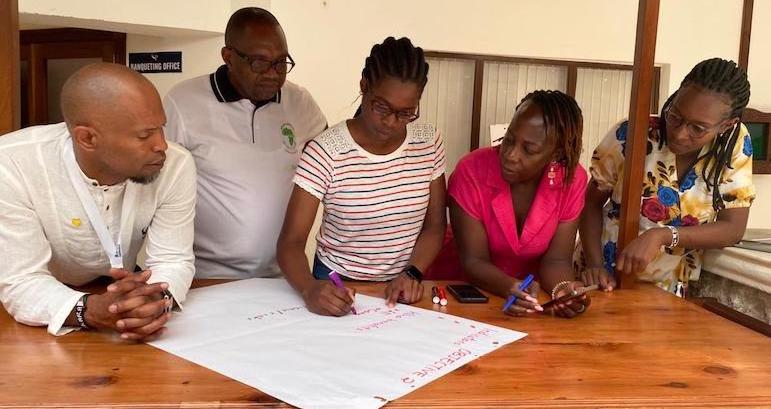
Together, a shared vision, mission and roadmap to guide implementation of a learning network were developed. The partners came together in March 2025 for a second workshop in Dar es Salaam, Tanzania, to continue working on the initiative. Here, members chose the name Bahari – Swahili for “ocean” – to show the network’s commitment to protect the region’s marine resources. They also finalised roles within the network, refined the roadmap and agreed on a timeline for its launch.
Later that year, in September 2025, the Bahari Learning Network (BLN) was formally launched during a pre-meeting of the 13th WIOMSA Scientific Symposium in Mombasa, Kenya. The BLN is a regional platform that connects civil society organizations, community networks, governments, NGOs, researchers and other partners. By co-designing and sharing training materials and facilitating peer-to-peer learning and knowledge exchanges, the network strengthens locally led coastal conservation initiatives and climate resilience.
Partners met for a third time in Mombasa, following the Our Ocean Conference in June 2026. Facilitated by the Maliasili team and hosted by WWF-Kenya the workshop provided a platform for members to discuss the importance of combining traditional knowledge and grassroots experience with scientific research to enable an inclusive conservation approach.
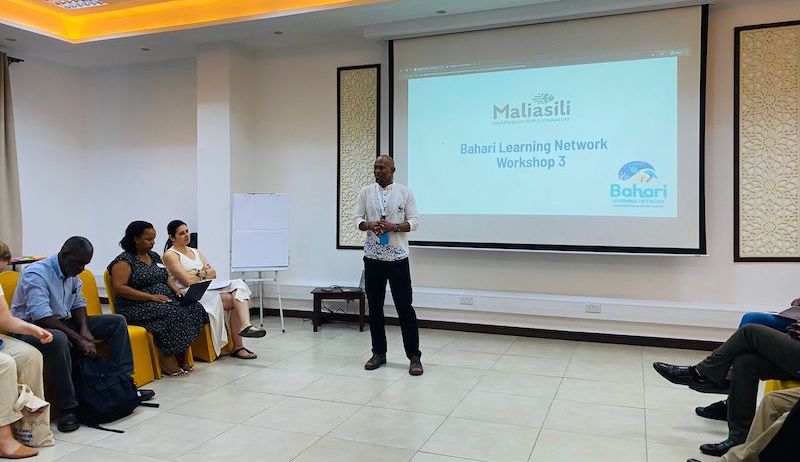
As the network continues to grow, the BLN is adopting a flexible model that allows each country to develop structures appropriate to its specific context while remaining connected through a common regional framework. As the primary funding source, WWF was voted as the interim secretariat. The network has also established a core team to help carry the process forward.
Once pilot sites for the learning network have been selected, community capacity needs will be assessed through a series of interviews and focus groups. An online repository is also planned as soon as the BLN strategy is finalised and the necessary financing has been secured. Today, the BLN gathers more than 30 member organizations, and membership remains open to NGOs in the region.
Steps to establishing community learning networks
These stories – from three learning hubs in different regions and stages of development – provide the critical success factors for establishing learning networks:
- Communities are the experts of their knowledge. Conducting surveys and listening closely to local people to understand what they know and what they are struggling with is a crucial first step to co-designing learning hubs.
- Partnering with government on national/regional plans can accelerate implementation by aligning civil society initiatives with national efforts.
- Establishing the foundations of collective governance, such as a shared vision and an agreed implementation roadmap with a timeline and role division, can help the parties driving implementation to keep pulling in the same direction.
- Modality matters. Presentations by technical experts resonate less with communities than peer-to-peer knowledge sharing in groups, where all participants are encouraged to have a voice.
- Community ownership of learning hubs can help ensure long-term learning. Co-designing governance structures and learning programmes with communities will help ensure that they take ownership of the hubs over the long term.
Cover image © WWF-Philippines
