 October 29, 2026
 3 minutes
Local fishers on the island of Bonaire, in the Caribbean, are helping researchers develop a new method for restoring coral reefs: breeding critical reef species that protect corals in a floating nursery system that releases them straight into their natural habitat.
Before sunrise, the fishers of Piskabon – a fishing cooperative on the island of Bonaire in the Caribbean – are already out on the water, hauling in lines that used to come back heavy. But these days, they mostly come back light, threatening both local food security and livelihoods.
While overfishing is often cited as the cause for declining fish stocks, this ecological trend may also be a potential sign that the island’s reefs are no longer effective as safe havens for juvenile fish. According to the UN, up to 90% of reefs1 are threatened by climate-induced marine heatwaves, increasing pollution, and the loss of critical fish species that maintain the reef system’s balance. Indeed, the Piskabon fishers have noted that local reefs no longer seem as productive as they once were.
“Reefs have become a ghost town,” says Ernest De Lannoy, chairperson of Piskabon. “This has far-reaching consequences … socially, societally, culturally and economically.”
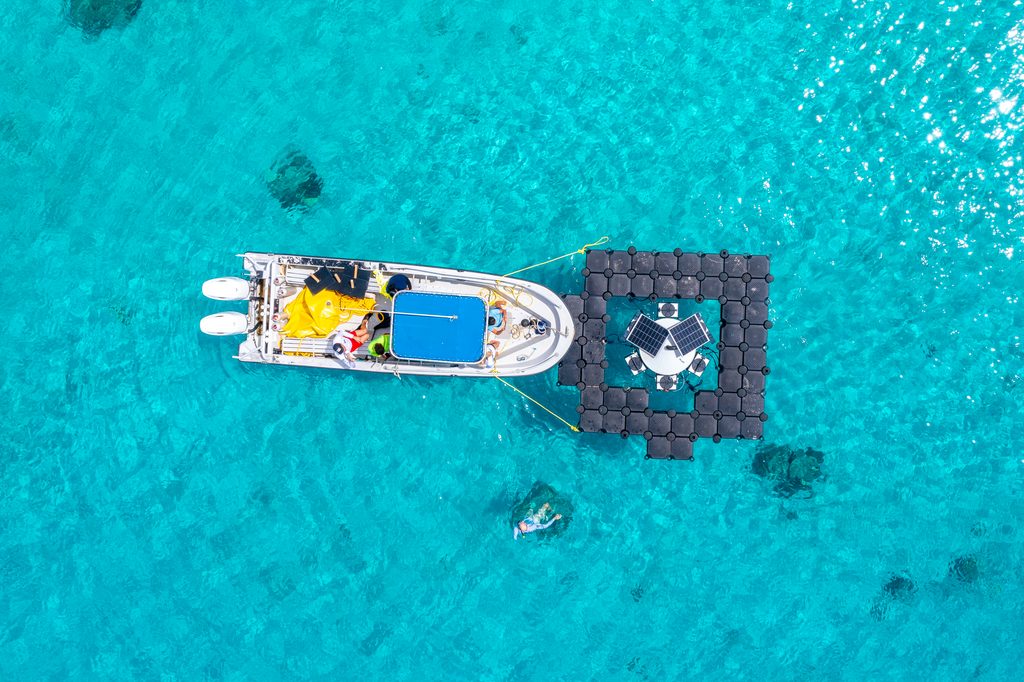
Since 2018, the Piskabon cooperative has advocated for sustainable fishing practices and healthier marine ecosystems across Bonaire. In recent years, Piskabon has also partnered with scientists from RoffaReefs, a Netherlands-based coral conservation initiative in the Rotterdam Zoo, providing local knowledge to support field research of a potential solution to restore coral reefs. The proposed solution: breed fish species that protect reefs directly in the ocean using a floating incubator system that releases juveniles straight onto the reef.
These species can then work to restore and maintain the ecological balances that support coral growth. Surgeonfish and parrotfish, for example, clear algae off young coral and rocks so that new corals can take hold, while other species patrol for coral-eating pests.
Community knowledge and action: the keys to success
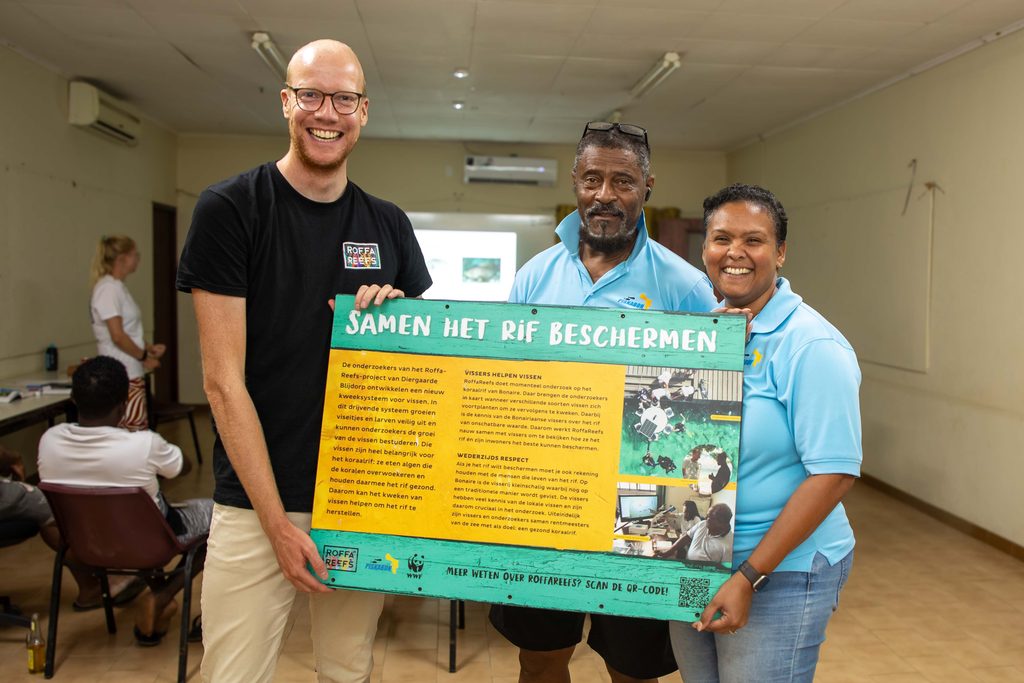
The fishers’ traditional knowledge of fish behaviour and ocean conditions guided the placement and timing of the nets used to collect wild fish eggs and larvae for further incubation. Without this local knowledge, it would have taken years of research to piece this information together. Plankton collection nets are temporarily attached to yellow buoys belonging to the National Parks Bonaire Foundation (STINAPA), an NGO that manages Bonaire’s nature parks on behalf of the government. RoffaReefs then actively collects the samples by swimming transects of a few 100 metres. Dive Friends and the Dutch Caribbean Nature Alliance are also partners in the reef species project.
Out on the water, the Piskabon fishers also help to maintain and protect the nets, ensuring that technical equipment is respected and not removed. Their efforts are helping researchers build a clearer picture of how different species develop, how long their larvae drift before settling, and what environmental cues trigger growth or metamorphosis.
Breeding reef fish in captivity has long been considered challenging, but this research is helping to close that gap. It is also laying the groundwork for breeding protocols that could eventually be shared with other conservationists and restoration teams around the world.
From the community’s perspective, reef restoration could support sustainable livelihoods in the long term. Healthy corals also act as nurseries for commercially important fish species. Successful restoration of local corals could therefore help boost local fish stocks, sustaining the cultural and economic importance of fishing on Bonaire.
Finally, this initiative demonstrates the importance of building solutions alongside the people who live closest to the problem.
The reef fish incubation project is a collaborative initiative by RoffaReefs, Piskabon, Rotterdam Zoo, TU Delft, Burgers’ Zoo and HKV lijn in water B.V., and WWF-Netherlands.
How the incubation system works:
1. Fish eggs and larvae are collected from the reef and placed in the floating system in the same water they will grow up in. This reduces the stress caused by transferring juveniles from the incubator to the surrounding ocean.
2. The larvae are raised in the system through their earliest, most vulnerable life stages, then released back onto the reef once they can survive independently. This gives them an advantage that most wild larvae never get.
3. The system floats directly on top of the reef itself, removing the need for separate climate-control equipment.
4. The incubator is carbon-neutral and designed for reef zones with high solar intensity, like the Caribbean.
Featured image: © Casper Douma
1 UN Environment Programme. N.d. Can coral reef restoration save one of the most vulnerable ecosystems to climate change? www.unep.org/news-and-stories/story/can-coral-reef-restoration-save-one-most-vulnerable-ecosystems-climate, accessed 4 September 2026.
