 November 16, 2026
 5 minutes
By Maria Honig
This year will likely be remembered as the year of the Super El Niño. Ocean surface temperatures have hit record highs and forecasters expect the climate event to peak sometime before January, becoming one of the strongest in recorded history. For the coastal communities WWF works with, this is not simply a headline or a forecast – it means marine heatwaves that bleach the reefs they fish, a shift in fish stocks, and storms and floods that put their homes and livelihoods at risk.
As delegations from around the world gather for COP31 in Antalya on Türkiye’s Mediterranean coast, the talk will turn to adaptation targets, indicators and finance. Yet just beyond the negotiation halls, on the same sea, coastal communities are already responding to the impacts of a changing climate – fishers are adapting their catch to warming waters, women’s savings groups are financing local enterprises, and communities are protecting the reefs and seagrass that shield their homes from storms.
Since 2020, I have had the privilege of leading the WWF Coastal Communities Initiative, and if there is one thing these communities have taught me, it is that they are not waiting for the world to act. The question for COP31 is whether governments are ready to meet them where they are.
© Claudia Amico / WWF Mediterranean
Closing the gaps in adaptation finance and planning
Even though coastal communities are on the front lines of a climate change, they are too often left out of their countries’ adaptation plans, with limited agency and capacity to fully harness the power of nature to help them prepare for the future.
They also receive only a small share of climate finance, typically from the public sector on a short-term, per-project basis that is incompatible with scale. Private finance is being explored as an alternative, but it tends to flow through debt- or equity-based investments that prefer financial returns in the near term – a challenge for high-risk, small-scale community-led enterprises. The resulting finance gap leaves community-led initiatives struggling to scale those nature-based adaptation actions that they know are effective.
But despite these barriers, coastal communities are not waiting for financial support to act. They are taking a leading role in testing and implementing innovative, inclusive and nature-based solutions (NbS) to protect themselves against the effects of climate change and contribute to global mitigation goals. The WWF CCI’s most recent publications, co-produced with three of WWF’s regional oceans teams, showcase several stories of inclusive, effective NbS from the Mediterranean, the Pacific and the South West Indian Ocean that demonstrate what has worked on the ground – and what could be scaled with the right kind of support from global policymakers.
Inclusive adaptation planning in Croatia
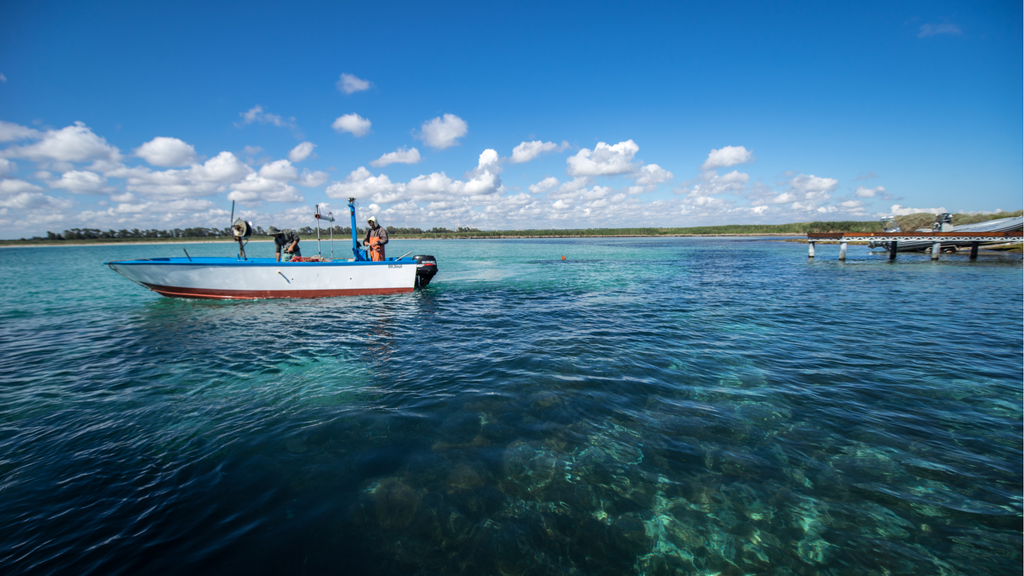
Coastal communities across the Mediterranean are partnering with the 100MPA MedAlliance to collectively take decisions that will embed climate adaptation into marine protected area management. A leading example of such a partnership is Croatia’s Brijuni National Park, where residents, fishers, scientists, park managers and local authorities co-developed strategies to address climate risks, enhance ecosystem health and protect local livelihoods.
Pivoting fisheries to secure livelihoods in Tunisia
In Tunisia, small-scale fishers are adapting to increasing marine temperatures by shifting their target species from sharks to blue crabs, creating much-needed space for shark populations to recover while controlling an invasive species. Find more stories from the Mediterranean in “Communities at the Helm”, a report that will be launched by WWF CCI, WWF Mediterranean and the World Resources Institute Oceans on 17 November at COP31.
Malagasy communities take the lead in low-cost early storm warning system
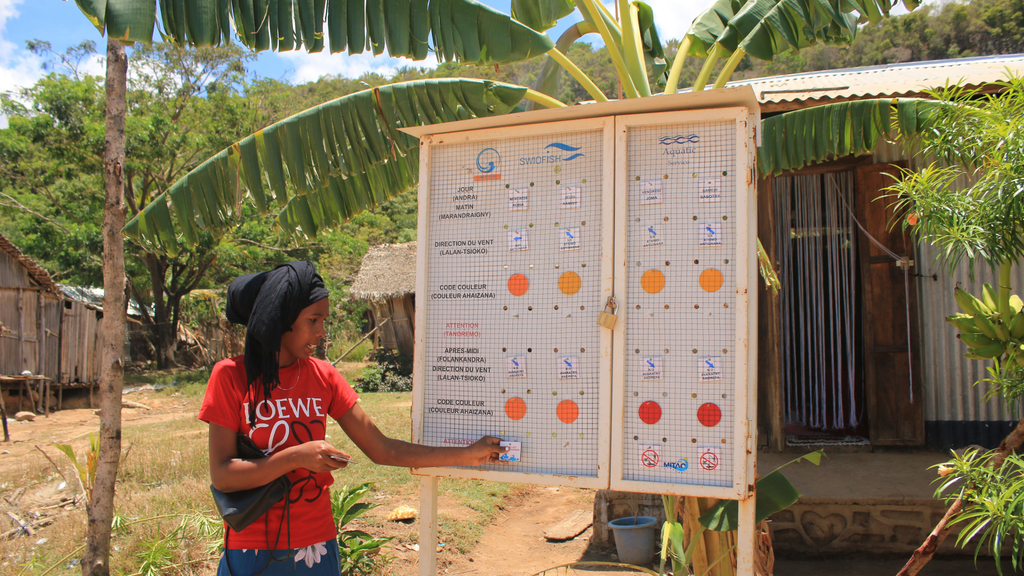
As climate-induced weather events intensify, traditional knowledge alone may no longer ensure fishers’ safety. In Madagascar, the Mitao Forecast Early Warning System sends weather forecast updates via SMS to village representatives, who then share them in near-real-time on public noticeboards. Fishers check the boards before casting off and early data suggests that weather-related deaths at sea have fallen by 98% across more than 60 villages as a result. The policy brief Coastal Communities: Central Agents for Shifting Climate Adaptation from Policy to Practice, co-published with WWF South West Indian Ocean (SWIO), provides more details on what communities across the SWIO region are doing to strengthen their climate resilience – and what support they urgently need to do more.
How communities in Fiji are already protecting climate-resilient coral reefs
Coastal communities can play an important role in creating healthier, well-managed ecosystems that are better able to recover from climate shocks. This was demonstrated in Fiji’s Namena Marine Reserve and Vatu-i-Ra Conservation Park, two community-led marine conservation areas that were devastated by Cyclone Winston in February 2016. Over the course of two days, about 63% of hard coral cover was lost across both areas. But because the reefs were healthy when the storm hit, they were better able to bounce back and by 2020 coral communities had returned to their pre-cyclone composition. Find out more about how community-led conservation in the Pacific could contribute to global climate goals and the Kunming-Montreal Global Biodiversity Framework’s 30×30 ambitions in the Reefs, Rights and Resilience report, which we co-produced with WWF Pacific and launched at the pre-COP31 meetings in Fiji earlier this year.

© Jürgen Freund / WWF
What communities need to deepen and scale initiatives
Coastal communities’ conservation efforts are well aligned with global biodiversity and climate targets and provide a practical, low-cost, nature-based solution for countries to achieve their national commitments.
To fully tap into this potential, WWF is calling on COP member countries to:
• Recognise and resource Indigenous Peoples and local communities as partners in ocean stewardship, supported by traditional knowledge, community governance systems and equitable participation in decision-making, implementation and benefit-sharing.
• Accelerate the implementation of ocean-based mitigation and adaptation by boosting support for vulnerable countries and communities through finance, technology transfer, capacity building, project preparation and knowledge-sharing, with particular attention to small island developing states (SIDS), least developed countries and vulnerable coastal states.
• Expand implementation support and innovative finance mechanisms to complement grant-based and debt-sensitive finance, including through project preparation, technical assistance, direct-access channels and high-integrity financing instruments, such as blue bonds, debt-for-nature and debt-for-ocean swaps, blended finance and parametric insurance. At the same time, ensure that finance remains inclusive, gender-responsive and rights-based for Indigenous Peoples, local communities, SIDS and vulnerable coastal nations.
• Strengthen accountability by connecting governments, finance institutions, technical partners, Indigenous Peoples, local communities and non-party stakeholders around measurable outcomes, improving the tracking of ocean-climate finance and implementation to build a shared evidence base, identify investment gaps and accelerate delivery.
The real measure of progress will be whether these commitments make a difference to the lives of people who experience the effects of climate change every day. A few years ago, I spent three hours in the water in Nusatuva, in the Solomon Islands, with community rangers – two generations of women and men monitoring the reef their families rely on. That is what climate adaptation looks like: not a line in a negotiating text, but people who know their ocean, and protect it because their lives and livelihoods depend on it.
From the Mediterranean to the Pacific and the South West Indian Ocean, the solutions are already working. What coastal communities need now is for governments to recognise their rights, invest in their capacity and get finance into their hands – directly, and for the long term. And COP31 is the moment to make that commitment.
Featured image: © Union for the Mediterranean
